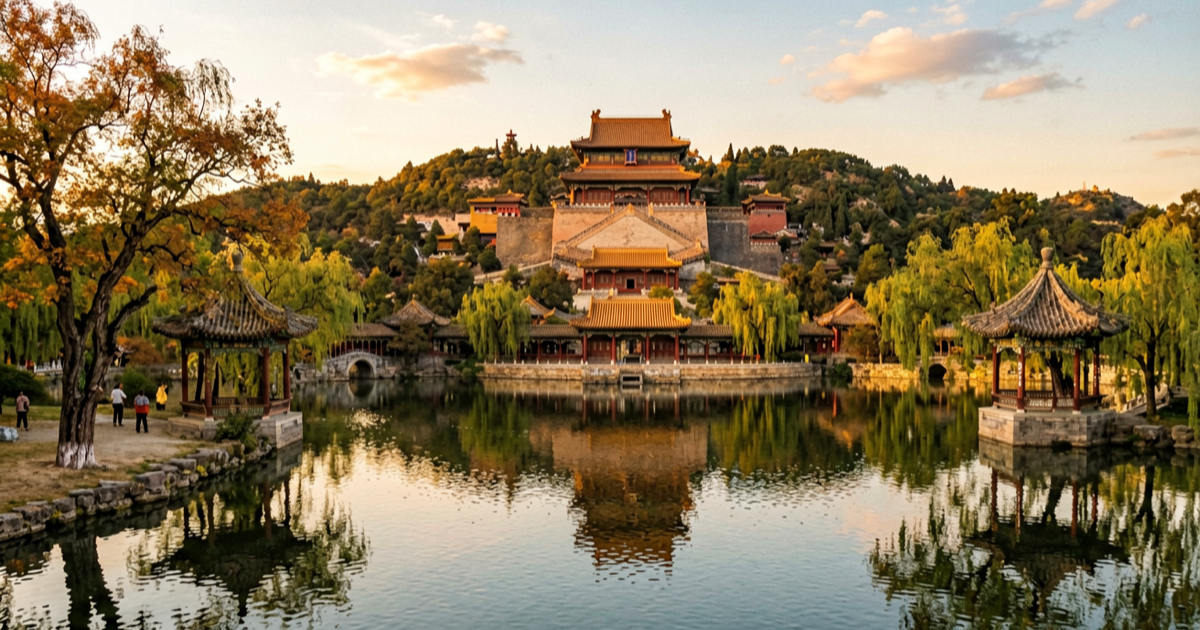
Chengde
Mountain Resort · Outer Temples · Bashang Grassland · Jinshanling
Last updated 22 July 2026 · by the Walk Voyage Editorial Team
Visitor data snapshot
What travelers actually experience in Chengde
Verified visitor numbers, ratings, and ticket prices from a third-party travel platform. Trip.com international edition (HKD pricing), snapshot 2026-07-30 · snapshot 2026-07-30.
8
Bookable attractions
4.74/5
Average rating
60K
Total reviews
1
Free entries
| Top attraction | Rating | Reviews | Ticket (HKD) |
|---|---|---|---|
| Chengde Mountain Resort Scenic Area | 4.6 | 27,063 | HK$151.00 |
| Putuo Zongcheng Temple | 4.7 | 5,583 | HK$93.00 |
| Puning Temple | 4.8 | 2,595 | HK$70.00 |
| China Horse Town Tourist Resort | 4.9 | 6,104 | HK$35.00 |
| Kangxi Ceremony Live Show | 4.8 | 3,380 | HK$229.00 |
| Jinshanling Great Wall | 4.7 | 2,414 | HK$0.00 |
| Bai Li Skyroad | 4.9 | 3,423 | HK$139.00 |
| Yunzhong Grassland | 5.0 | 2,650 | HK$116.00 |
Source: Trip.com international edition (HKD pricing), snapshot 2026-07-30. Prices and review counts shift over time; check the source platform for current booking.
Chengde at a glance
Travel snapshot- Province
- China
- Best season
- May-Oct (heritage) | Dec-Feb (ski at Saihanba) | Jul-Aug (Bashang Grassland)
- Trip length
- 3 days recommended
- Avg budget
- $314 per person
- Top attractions
- 8 featured · 8 rated 4.7+
- Food picks
- 6 signature dishes
- Routes curated
- 3 multi-day itineraries
- Budget
- ¥4189 itemized
About Chengde
Chengde, in northern Hebei and historically known as Rehe (热河), was the Qing-dynasty summer capital where the Kangxi, Qianlong, and Jiaqing emperors escaped Beijing's summer heat. The city's centerpiece is the UNESCO-listed Mountain Resort (Bishu Shanzhuang) - the largest imperial garden in China at 5.64 km2 - surrounded by 12 surviving Qing-dynasty Outer Temples that blend Han, Tibetan, and Mongol architectural traditions. Beyond the heritage core, the prefecture sprawls north into the Bashang plateau: the Fengning grasslands, the Saihanba man-made forest (China's largest plantation), and the China Horse Town resort at 1,800 m altitude. The Jinshanling section of the Ming Great Wall and the imperial Qing Eastern Tombs round out the trip. Chengde is 4-5 hours by high-speed rail from Beijing and a standard 2-3 day Beijing add-on.
Best Season
May-Oct (heritage) | Dec-Feb (ski at Saihanba) | Jul-Aug (Bashang Grassland)
Days Recommended
3 Days
Avg Budget
$314
Location
Hebei, China
Must-See Spots
Top Attractions in Chengde
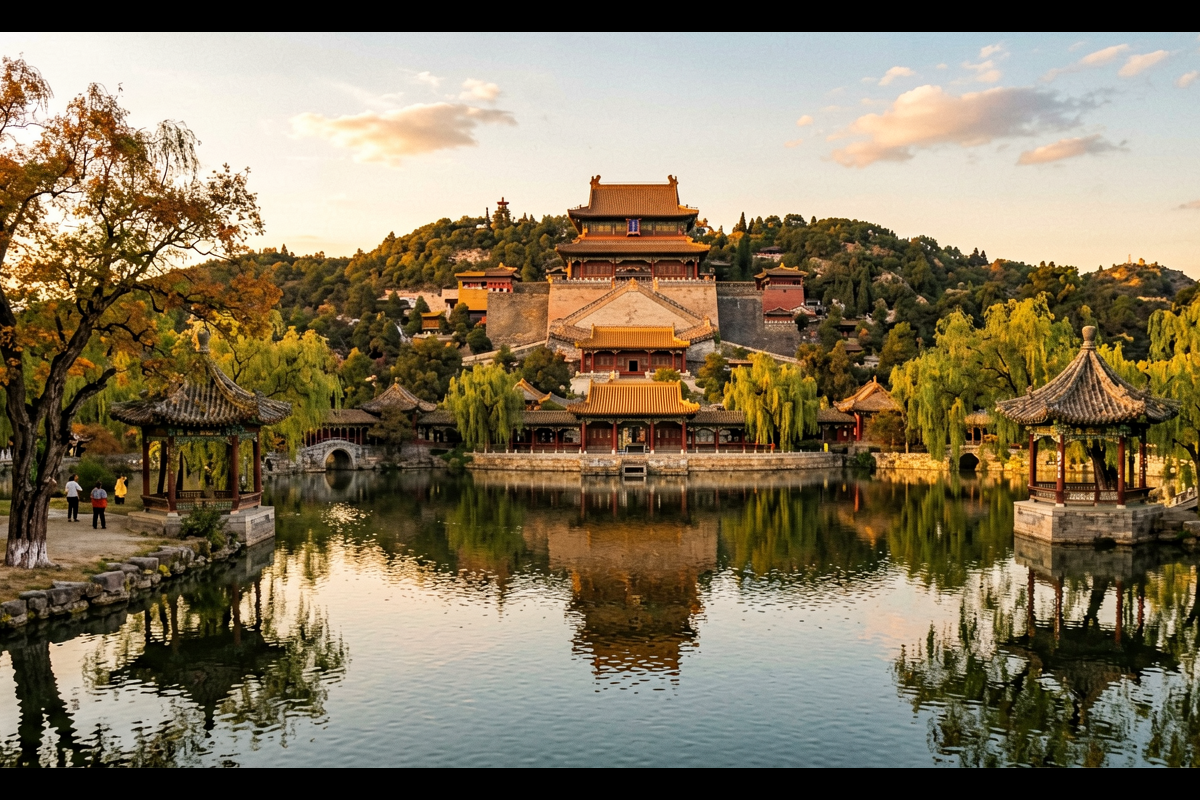
Chengde Mountain Resort (Bishu Shanzhuang)
A 5.64 km2 Qing-dynasty imperial summer retreat begun by the Kangxi Emperor in 1703 and expanded by Qianlong, the largest imperial garden in China. The walled garden contains 120 palace buildings, 120 landscape scenes, 28 Tibetan-style temples, and 3 km of lake shore. Divided into the palace section, the lake district, the plain district, and the mountain district, the resort blends the Suzhou classical garden style with the Mongolian steppe, all in a single continuous wall. UNESCO World Heritage since 1994. Trip.com's #2 Hebei attraction (27,063 reviews, 4.6/5).
Buy a 2-day ticket if you want to cover both the lake district and the mountain district. The 1-hour electric-sightseeing-car ride in the mountain area is highly recommended. Combined ticket with the Outer Temples saves 30 RMB.
Putuo Zongcheng Temple (Little Potala Palace)
The largest and most-impressive of Chengde's 12 surviving Outer Temples, a 1767 Qing-dynasty Tibetan Buddhist temple built in Qianlong's reign to honor the Panchen Lama and the visiting Mongolian nobles. Modeled on the Lhasa Potala Palace, the 22.5-meter Red Throne hall is topped with 8,000+ gilded copper tiles and the temple's 5 main halls occupy 3 ascending terraces. Trip.com #9 Hebei attraction (5,583 reviews, 4.7/5).
Best in summer when the 1,200-step climb is shaded by old trees. The 09:00 morning arrival catches the temple in best light. Allow 2-3 hours including the Wanfagong (Hall of Ten Thousand Buddhas) on the upper terrace.
Puning Temple (Big Buddha Temple)
A 1755 Qing-dynasty temple built in the year Qianlong pacified the Dzungar Mongols, modeled on the Samye Monastery of Tibet. The temple's main attraction is the 22.3-meter Thousand-Armed Guanyin statue - the tallest wooden statue in the world - carved from five types of wood and standing on a 1.2-meter lotus base. The Six-Worldly Mandala pavilion behind the main hall is the only one of its kind in China. Trip.com #21 Hebei (2,595 reviews, 4.8/5).
Combined ticket with Putuo Zongcheng saves 20 RMB. Walk slowly through the main hall to fully appreciate the scale of the 22-meter Guanyin. The temple's Tibetan and Han architectural blend is best seen from the side courtyard.
China Horse Town Tourist Resort
A modern Bashang cultural resort in Fengning Manchu Autonomous County at 1,800 m altitude, the top-rated Hebei leisure resort on Trip.com (6,104 reviews, 4.9/5). The 1,500-mu complex combines the Cai Flag Horse Show (Mongolian cavalry reenactment), the equestrian theater, the Dancing Horse World theme park, the western prairie restaurant, and the boutique yurt camp. A standard 1-2 day Beijing or Chengde weekend escape.
1.5-2 hours drive from Chengde. Overnight in the on-site yurt hotel for the sunrise horseback ride. The summer night show (July-August only) features the Cai Flag performance on the central prairie.
Jinshanling Great Wall
The most-photographed 10-km Ming Great Wall section, 125 km northeast of Beijing and 60 km from Chengde city. The 67 watchtowers and 5 passes preserve the most authentic Ming military architecture, and the Jinshanling-to-Simatai sunrise hike is one of China's top-3 classic Great Wall experiences. The Han-era General Xifeng Pass ('West Phoenix') is the iconic watchtower. Free entry; Trip.com #26 Hebei attraction (2,414 reviews, 4.7/5).
Best for the half-day section between Jinshanling entrance and the General Tower. Combine with the Gubei Water Town (Gubeikou) for an overnight. The 6am sunrise hike is the most-photographed trip.
Saihanba National Forest Park
A 200 km2 man-made forest plateau in Weichang County, 250 km north of Chengde, the largest plantation in China and a UNESCO Man and the Biosphere Programme reserve. The forest is dominated by 100-year-old larch, birch, and pine, planted by three generations of forest workers since 1962 to halt the Inner Mongolian desertification. The 4.7/5 Trip.com rating is for the autumn golden larch (mid-September to early October).
5-6 hours drive from Chengde city. Best mid-September to early October for the golden larch. The 7-Lakes Route and the Star-Gazing Hill are the most-photographed. Bring layers - autumn nights at 1,500 m drop to -5°C.
Kangxi Ceremony Live Show
A 1,200-actor outdoor spectacular at the Yuanbao Mountain amphitheater, 5 km outside the Mountain Resort, telling the story of the Kangxi Emperor's 61-year reign through dance, music, and battle reenactment. The 75-minute show uses the natural mountain backdrop, live horses, and a 1,000-m2 LED stage. Trip.com #16 Hebei (3,380 reviews, 4.8/5) and the most-rated live performance in Chengde.
Showtime: 19:30-20:45 in summer (April-October), 19:00 in winter. Buy tickets via the Chengde official WeChat for 10% off. Hotel pickup from Mountain Resort area included on combo tickets.
Yunzhong Grassland (Cloudland Grassland)
A 1,800-m high-altitude grassland in Fengning County, 100 km north of Chengde, the top-rated Bashang grassland on Trip.com (2,650 reviews, 5.0/5). The summer wildflower-blanket from late June to early August is the signature experience, paired with horseback riding, Mongolian-yurt camping, and the Manchu-Mongol folk dance show. The Bashang plateau has the most-photographed sunsets in northern Hebei.
2.5 hours drive from Chengde. Best late June to early August for the wildflowers. Overnight in the Mongolian yurt camp (150 RMB/night) for the sunrise. Bring layers - summer nights drop to 5°C.
Local Flavors
What to Eat in Chengde
Manchu Eight Great Bowls (Manzu Ba Da Wan)
The signature Manchu banquet of Chengde - a set of 8 cold and 8 hot dishes served in 8 'big bowls' per round, with the full 64-bowl ceremonial banquet reserved for Qing imperial events. The hot bowls include braised pork, braised chicken, fish, pork balls, and braised mushrooms; the cold bowls include jellyfish salad, century egg, smoked meat, and preserved vegetables. Found at every Chengde restaurant serving Manchu cuisine.
Recommended: Qingzhenyuan Manchu Restaurant (清真园) on Lizhengmen Street, or any Chengde Mountain Resort-side hotel restaurant
Chengde Sesame Cakes (Chengde Shaobing)
The local flatbread of Chengde - a crispy layered sesame-coated round bread, originally introduced by Qing imperial cooks. Baked in clay ovens and served with hot sour tofu pudding (doufu nao) for breakfast, or with braised pork and pickles for lunch. Found at every morning market in the Mountain Resort area.
Recommended: Any Mountain Resort side-street vendor, or the Lizhengmen morning market
Nuanquan Sticky Rice (Nuanquan Huangmi Fan)
A Yu County (Zhangjiakou, but served in northern Hebei restaurants) specialty - sticky millet rice steamed in a wooden bucket and served with red bean paste and brown sugar syrup. The famous Nuanquan Tree Flower (打树花) performance is a related cultural highlight of the village. Found at most Chengde Manchu restaurants and Yu County-style restaurants.
Recommended: Any Nuanquan-themed restaurant on Yunshan Street in Chengde
Bashang Whole-Roasted Lamb (Bashang Kao Quan Yang)
The Bashang plateau's signature celebration dish - a whole lamb roasted on a spit over juniper wood for 4-6 hours, served family-style on a large platter with salt-pepper dip and the inner-organ soup. The high-altitude grass-fed lamb is the most-flavorful in China. Found at the China Horse Town and the Yunzhong Grassland resort restaurants.
Recommended: China Horse Town central prairie restaurant, or the Yunzhong Grassland yurt camp
Oat-Flour Noodles (Youmian Tiao)
The Zhangjiakou-Bashang staple - chewy noodles made from oat flour, served in a sour-spicy broth with potatoes, tomatoes, and pickled vegetables. The classic Bashang cold-climate comfort food, paired with smoked pork or hand-grab mutton. Found at every Bashang-plateau town restaurant and the Chengde North Mountain Hotel restaurants.
Recommended: Any Bashang-themed restaurant on the S206 road north of Chengde
Hand-Grab Mutton (Shou Zhua Yang Rou)
The grassland classic - chunks of mutton boiled in salt water and eaten with the fingers, paired with a thin salt-and-chili dip and the Mongolian 'silver-bowl' sour mare's milk tea. The defining Bashang feast experience, served at every China Horse Town and yurt camp.
Recommended: Yunzhong Grassland central camp, or the Fengning Manchu-Mongol folk village
Curated Itineraries
Suggested Routes in Chengde
Chengde Mountain Resort & Outer Temples 2-Day Trip
A 2-day trip from Beijing or Chengde city covering the UNESCO Mountain Resort and the 4 most-photographed Outer Temples. Best April-October; winter adds the Kangxi Ceremony night show.
Chengde + Jinshanling Great Wall 3-Day Heritage Trip
A 3-day heritage trip combining Chengde's Mountain Resort and Outer Temples with the Jinshanling Great Wall and the China Horse Town Bashang resort. The most-popular first-time Chengde itinerary.
Bashang Grassland & Saihanba 3-Day Autumn Trip
A 3-day autumn trip into the Bashang plateau - Saihanba's golden larch forest, the Yunzhong Grassland, and the Fengning Bashang Skyroad. Best mid-September to early October.
Trip Planning
Travel Budget for Chengde
Transport
Dining
Attractions
Accommodation
Total estimated budget: $314 per person
Actual costs vary by travel style, season, and booking choices.
Common Questions
Chengde Travel FAQ
What is the best time to visit Chengde?
May-Oct (heritage) | Dec-Feb (ski at Saihanba) | Jul-Aug (Bashang Grassland) is generally the best season, with comfortable weather for sightseeing and outdoor activities.
How many days are recommended for Chengde?
3 days is a practical baseline for first-time visitors covering major highlights.
What is a typical travel budget in Chengde?
A common reference is around $314 per person, depending on hotel level, transport, and attraction choices.
Is Chengde suitable for family travel?
Yes. Chengde has diverse attractions, flexible route options, and accommodation levels suitable for family trips.
More Walk Voyage
Explore Other China Cities
Continue your journey through China with our other curated city guides — pandas, hot pot, karst landscapes, classical gardens, and more.
Sichuan
Chengdu / 成都
Pandas, teahouses, Sichuan hot pot, and slow urban living in the Land of Abundance.
Explore Chengdu →
Chongqing
Chongqing / 重庆
A dramatic mountain city of hot pot, rivers, night views, and layered urban streets.
Explore Chongqing →
Jiangsu
Suzhou / 苏州
Classical gardens, canal streets, silk culture, and quiet Jiangnan elegance.
Explore Suzhou →
Hunan
Changsha / 长沙
Bold street food, riverside nightlife, museums, and youthful city energy.
Explore Changsha →
Zhejiang
Shaoxing / 绍兴
Lu Xun's hometown, ancient calligraphy capital, and home of China's iconic yellow wine.
Explore Shaoxing →
Jiangxi
Jiujiang / 九江
Yangtze-side gateway to UNESCO Mount Lu, Poyang Lake wetlands, and one of China's most atmospheric old riverfronts.
Explore Jiujiang →
Shandong
Qingdao / 青岛
Red-tile harbor city on the Jiaodong Peninsula, home of Tsingtao beer, the holy Taoist mountain of Laoshan, and a 19th-century German concession old town.
Explore Qingdao →
Hebei
Zhangjiakou / 张家口
Historic gateway between the North China plain and the Mongolian steppe, 2022 Winter Olympics co-host, and starting point of the famous Grassland Sky Road drive.
Explore Zhangjiakou →
Fujian
Xiamen / 厦门
Walkable island city on the Taiwan Strait, paired with the UNESCO World Heritage piano island of Gulangyu, Minnan street food, and the 1,300-year Quanzhou West Street.
Explore Xiamen →
Heilongjiang
Harbin / 哈尔滨
19th-century Russian-built city on the Songhua River, home of the world-famous Ice and Snow Festival, Central Avenue, Saint Sophia Cathedral, and the Siberian Tiger Forest Park.
Explore Harbin →
Liaoning
Dalian / 大连
Harbor city on the southern tip of the Liaodong Peninsula, home of Jinshitan Golden Pebble Beach, Laohutan Ocean Park, the 32-km Binhai Road, and Bohai seafood.
Explore Dalian →
Sichuan
Aba (Tibetan & Qiang) / 阿坝
Western Sichuan highland prefecture, home of UNESCO Jiuzhaigou and Huanglong, Mount Siguniang, the Ruoergai grasslands, and the rich Qiang and Tibetan ethnic cultures.
Explore Aba (Tibetan & Qiang) →
Guangdong
Zhuhai / 珠海
A relaxed coastal city for islands, seafood, family attractions, and sea views.
Explore Zhuhai →
Guangdong
Shenzhen / 深圳
China's tech-capital megalopolis with the OCT theme park cluster, the 599m Ping An Finance Center, and Greater Bay Area coastal escapes.
Explore Shenzhen →
Hebei
Qinhuangdao / 秦皇岛
Seaside escapes, the Great Wall by the sea, beaches, and northern coastal scenery.
Explore Qinhuangdao →
Guangxi
Guilin / 桂林
World-famous karst landscapes along the Li River, ancient Yangshuo streets, terraced rice fields, and timeless Guangxi scenery.
Explore Guilin →
Yunnan
Kunming / 昆明
Yunnan's 'Spring City' capital at 1,891 m, the gateway to the UNESCO Stone Forest, the 330 km2 Dianchi Lake, and the entire Yunnan travel network.
Explore Kunming →
Yunnan
Dali / 大理
The Bai minority old capital between the 4,122 m Cangshan Mountain and the 250 km2 Erhai Lake, the mid-point of the classic Yunnan route.
Explore Dali →
Yunnan
Lijiang / 丽江
The UNESCO 800-year-old Naxi old town at 2,400 m, the gateway to the 5,596 m Yulong Snow Mountain, the Tiger Leaping Gorge, and the Mosuo Lugu Lake.
Explore Lijiang →
Hebei
Shijiazhuang / 石家庄
Hebei's capital city with the 1,600-year-old Zhengding Ancient City, the Song-dynasty Longxing Temple, the UNESCO-tentative Zhaozhou Bridge, and the Taihang mountain escapes.
Explore Shijiazhuang →
Shanxi
Taiyuan / 太原
Shanxi's 2,500-year-old capital on the Fen River, home of the 1,500-year-old Jinci Temple, the Shanxi Museum, the Donghu Vinegar Garden, and the most-celebrated knife-cut noodles in China.
Explore Taiyuan →
Shanxi
Datong / 大同
Northern Wei capital on the Great Wall frontier, home of the UNESCO Yungang Grottoes (252 caves, 51,000+ statues), the Liao-dynasty Huayan Temple, the Hanging Temple, and the reconstructed Ming city wall.
Explore Datong →
Shanxi
Shuozhou / 朔州
Northern Shanxi frontier city in the historic Dai County region, home of the 1,000-year-old Yingxian Wooden Pagoda (the world's tallest surviving all-wood pagoda at 67.31 m, built without nails in 1056).
Explore Shuozhou →
Shanxi
Xinzhou / 忻州
Northern Shanxi prefecture, gateway to two UNESCO sites: the sacred Buddhist Mount Wutai (47 active temples, Tang-era Foguang Temple) and the strategic Ming-Great-Wall Yanmen Pass on the ancient frontier.
Explore Xinzhou →
Shanxi
Lvliang / 吕梁
Western Shanxi's Yellow-River-side prefecture, home of the 5A Qikou Ancient Town on the Yellow River, the Loess Plateau cave dwellings, and the 2,800-year-old Mian Mountain battlefield.
Explore Lvliang →
Shanxi
Jinzhong / 晋中
Heart of the historic Jin (Shanxi) merchant country, home of the UNESCO Pingyao Ancient City (2,800-year-old Ming-Qing walled town), the Qiao Family Compound, the Mianshan Mountain, and the Zhangbi Ancient Fortress.
Explore Jinzhong →
Shanxi
Yangquan / 阳泉
Eastern Shanxi city at the foot of the Taihang Mountains, gateway to the 5A Cang Mountain, the historic Niangzi Pass (one of the Great Wall's nine strategic passes), and the Lutou Mountain.
Explore Yangquan →
Shanxi
Changzhi / 长治
Southeastern Shanxi gateway to the 5A Taihang Mountain Grand Canyon, the historic Shangdang region, the ancient Licheng walled town, and the famous Changzhi donkey meat and Lucheng hand-shaken pie.
Explore Changzhi →
Shanxi
Jincheng / 晋城
Southeastern Shanxi city on the Taihang edge, home of the 5A Huangcheng Xiangfu (the 300-year-old Chen Family Mansion, 'House of the Emperor'), Wangmangling's spectacular Taihang cliffs, and the Qing-era temple clusters.
Explore Jincheng →
Shanxi
Linfen / 临汾
Southern Shanxi cradle of Yao and Shun Chinese-civilization mythology, home of the 5A Yellow-River Hukou Waterfall (China's second-largest waterfall), the Hongdong Locust-Tree ancestral park, and the Xiaoxitian Buddhist grottoes.
Explore Linfen →
Shanxi
Yuncheng / 运城
Southernmost Shanxi city on the Yellow River, home of the 5A Salt Lake (one of the world's three inland salt lakes), the 700-year-old Yongle Palace murals, the 5A Guandi Temple, and the 6,000-year-old Houma bronze civilization.
Explore Yuncheng →
Shandong
Yantai / 烟台
Jiaodong Peninsula coastal city, home of the legendary Penglai Pavilion (one of China's Four Great Pavilions), the Changyu Wine Culture Museum (China's first industrial winery, 1892), the 40-island Changdao archipelago in the Bohai-Yellow Sea border, and the Jiaodong seafood tradition.
Explore Yantai →
Shandong
Jinan / 济南
Shandong's 2,500-year-old capital, the 'City of Springs' (Quancheng) with 720 named natural springs, the Baotu Spring (Number One Spring Under Heaven), the Shandong Museum, and the cradle of Lu cuisine (Jinan school).
Explore Jinan →
Shandong
Tai'an / 泰安
The gateway city to Mount Tai, the Eastern Sacred Mountain of China and UNESCO World Heritage, climbed by 72 emperors over 3,000 years. The 1,545-m Yuhuang Summit sunrise is the most-celebrated sunrise in China.
Explore Tai'an →
Shandong
Weihai / 威海
Coastal city on the eastern tip of the Shandong Peninsula, home of Liugong Island (the 1895 Sino-Japanese War memorial, the home of the Beiyang Fleet), the 40-km Huanhai Road coastal loop, the Rongcheng Swan Lake (winter Siberian swans), and the Korean-influenced food scene.
Explore Weihai →
Shandong
Zibo / 淄博
Central Shandong industrial and cultural city, the 2,000-year-old capital of the ancient Qi State, the 2023 viral Zibo small-pancake barbecue capital, and the home of the Zhoucun Ancient Commercial City and the Liaozhai City (Pu Songling memorial).
Explore Zibo →
Shandong
Qufu / 曲阜
Birthplace of Confucius in southwestern Shandong, with the UNESCO World Heritage Temple, Cemetery, and Mansion of Confucius (San Kong) - the 2,500-year-old ancestral complex of Confucianism, the Confucius Museum, and the Nishan Sacred Land.
Explore Qufu →
Shandong
Qingzhou / 青州
A 1,400-year-old ancient city in central Shandong, one of China's oldest continuously inhabited cities. Home of the Qingzhou Museum (with the 1996 Longxing Temple Buddhist statue discovery), the Yunmen Mountain cliff carving, and the Tuo Mountain Northern Wei grottoes.
Explore Qingzhou →
Shandong
Rizhao / 日照
Southern Shandong coastal city facing the Yellow Sea, with the 6-km Wanpingkou Beach (the most-sunrised beach in Shandong), the only coastal National Forest Park in China, the Dongyi Old Town, and the unique coastal 'sea of tea' plantations.
Explore Rizhao →
Shandong
Weifang / 潍坊
The world capital of kites in central Shandong, home of the Weifang International Kite Festival (April), the 1,500-year-old Shihu Garden, the Fangzi German-Japanese Old Town, the Bohai Eye spokeless ferris wheel, and the Yangjiabu New Year Painting village.
Explore Weifang →
Shandong
Linyi / 临沂
The largest city in Shandong (11+ million population) in the southeast, home of the 5A Mount Meng National Forest Park, the 2,000-year-old Yinqueshan Han Tomb Bamboo Slips (with the Sun Bin's Art of War), the Langya Ancient City, and the Wang Xizhi Former Residence.
Explore Linyi →
Shandong
Jining / 济宁
Home of Mencius in southwestern Shandong, with the 2,400-year-old Mencius Temple and Mansion in Zoucheng, the 1,000-year-old Baoxiang Temple with the 1,500-year-old underground palace, the Weishan Lake Red Lotus Wetland, and the Jining Canal Heritage.
Explore Jining →
Shandong
Dongying / 东营
Northernmost Shandong city on the Bohai Sea, home of the 5A Yellow River Delta National Park, the Red-Crowned Crane Sanctuary, the seasonal red-beach (red seepweed in October), and the Shengli Oilfield.
Explore Dongying →
Shandong
Zaozhuang / 枣庄
Southern Shandong city on the Grand Canal, home of the 5A Taierzhuang Ancient City (the most-celebrated living Grand Canal town), the 1938 Battle of Taierzhuang Memorial, the Weishan Lake Red Lotus Wetland, and the famous Zaozhuang spicy chicken.
Explore Zaozhuang →