Step 1
Pick a province
Open a province to scan its cities and the headline attractions in each. Five-A ratings highlight the must-sees.
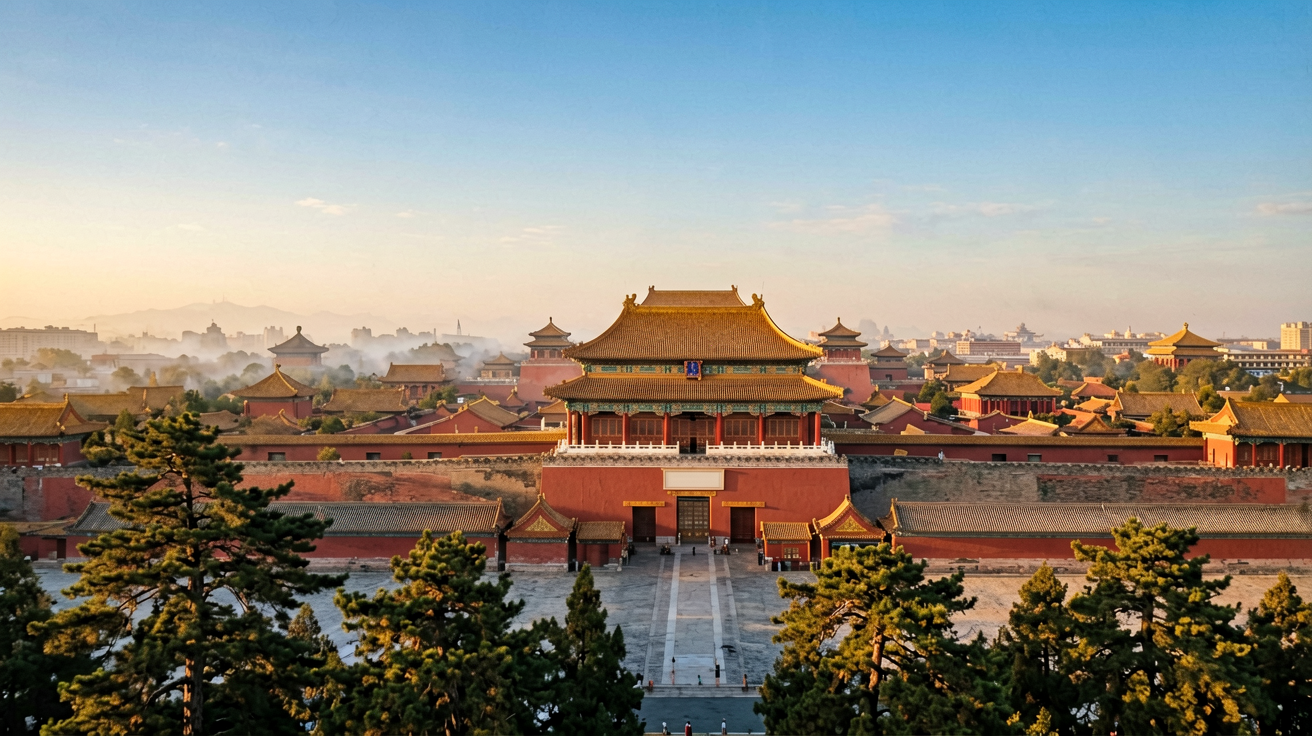
China travel by province
Pick a province to see its cities, top-rated A-grade attractions, and cuisine overview. Use this view as a planning lens before diving into individual city guides.
Last updated 22 July 2026 · by the Walk Voyage Editorial Team
Featured provinces
Each province page lists every prefecture-level city or district, their featured A-grade attractions, and the local food culture to expect.
Guangdong is China's southern gateway and most economically dynamic province, linking Hong Kong and Macau through the Greater Bay Area. Travelers come for Cantonese cuisine, Lingnan culture, coastal scenery, and theme-park clusters, while route planners can stitch together three very different travel styles: the Pearl River Delta urban belt, the Hakka and Danxia mountain interior, and the Chaoshan food-and-coast corridor in the east.
Open Guangdong guide →
Chongqing is a directly-administered municipality carved between the Yangtze and Jialing rivers, ringed by steep mountains that produce the city's famous nightscapes. Travelers come for the central-core food and river-view districts, the UNESCO-listed Wulong karst, the Dazu Rock Carvings, and the gateway views to the Three Gorges. Because Chongqing has no city-tier, districts and counties replace the city layer used elsewhere in this guide.
Open Chongqing guide →
Zhejiang is one of China's wealthiest eastern coastal provinces, packed into a compact triangle between Shanghai and the Pacific. The province layers classical Jiangnan water-town scenery (West Lake, Wuzhen, Nanxun), Buddhist sacred mountains (Putuo, Tiantai, Xuedou), and a long Pacific coastline with islands and seafood. Most routes blend Hangzhou (often the entry) with two more cities: Shaoxing for Lu Xun and yellow wine, Ningbo-Tiantai for temple culture, Wenzhou-Yongjia for mountain valleys, or Zhoushan for the Putuo pilgrimage.
Open Zhejiang guide →
Jiangxi is a southeastern inland province wrapped around the lower Yangtze and Poyang Lake, China's largest freshwater lake. Travelers come for Mount Lu (the summer retreat UNESCO Cultural Landscape), Jingdezhen (the millennium-old porcelain capital), Wuyuan's Ming-era Huizhou villages, and the red-revolutionary corridor from Nanchang to Jinggangshan. The province is also one of China's greenest - over 64% forest cover - and the slow-travel corridor of Poyang Lake wetlands and Gannan Hakka rounds is increasingly popular with second-visit China travelers.
Open Jiangxi guide →
Shandong is a populous eastern peninsula province that has shaped Chinese identity since the Spring and Autumn period. The cradle of Confucius, Mencius, and the Yellow River's lower reach, the province runs from Jinan's spring-water old city in the inland west, across Tai'an's sacred Mount Tai, to Qingdao, Yantai, and Weihai on the Jiaodong Peninsula coast. Routes typically combine Confucius's Qufu with Mount Tai, then either the Qingdao coast or the Yantai-Weihai island chain; longer trips add Yantai's Penglai and the Bohai ferry to Dalian.
Open Shandong guide →
Hebei is a populous northern province that wraps around Beijing and Tianjin, holding the most historically layered landscapes in North China. The province combines the imperial Great Wall at Shanhaiguan and Jinshanling, the Qing-dynasty Mountain Resort and Outer Temples at Chengde, the Xibaipo revolutionary site near Shijiazhuang, the Bashang Grassland and Chongli ski resorts north of Zhangjiakou, the Bohai bay beach at Beidaihe, and the Taihang mountain gorges along the western border. Most routes combine 2-3 of these - a classic Chengde + Shanhaiguan heritage loop, a Zhangjiakou ski or grassland weekend, or a Beidaihe summer beach escape.
Open Hebei guide →
Fujian is a southeastern coastal province that holds the most complete Minnan and Hakka cultural heritage in China, packed onto a mountainous peninsula between Taiwan Strait and the Wuyi Mountains. The province is best known for three UNESCO World Heritage Sites - Gulangyu Island in Xiamen, the Wuyi Mountain tea cliffs in Nanping, and the Fujian Tulou earth roundhouses in Longyan - plus a long tea-and-mudflats coast at Xiapu, the UNESCO-listed Mazu pilgrimage island at Meizhou Bay, and the cultural capital of Quanzhou. Routes typically combine 2-3 of these in 5-7 days, with Xiamen as the main entry point and Wuyi or Tulou as the inland goal.
Open Fujian guide →
Heilongjiang is the northernmost province of China, a vast cold-climate country of boreal forests, volcanic lakes, wetlands, and the great Heilongjiang (Amur) and Songhua rivers. The province runs from the Russian-tinged Harbin in the south - famous for the Ice and Snow Festival, the Central Avenue, and Saint Sophia Cathedral - through the forested Lesser Khingan range in the middle, to Mohe (China's northernmost point) in the north. Travelers come for the Ice and Snow Festival in winter, the forest-sea hiking in summer, the Wudalianchi volcanic park, and the unique Hezhe and Daur ethnic cultures in the far east. The province pairs naturally with the Russian Far East; a classic route is 5-7 days combining Harbin with the Yichun forest or Mudanjiang's Jingpo Lake.
Open Heilongjiang guide →
Liaoning is China's northeastern coastal province, the historical Manchurian heartland and the economic core of the Northeast (Dongbei). The province runs from the Qing-dynasty imperial capitals of Shenyang, across the pine-forested Liaodong Peninsula to the Bohai-bay harbor of Dalian, and continues east to the Yalu River and North Korea border at Dandong. Travelers come for the Qing heritage of Shenyang, the Russian-leased-port and seaside-resort atmosphere of Dalian, the red-crowned-crane wetlands of Panjin, the Lushun Russo-Japanese war sites, and the maple forests of Benxi. Routes typically combine 2-3 of these in 4-7 days, with Shenyang and Dalian as the standard anchors.
Open Liaoning guide →
Sichuan is the deepest cultural and ecological province of western China, a basin rimmed by the Tibetan Plateau, the Qinling, and the Hengduan Mountains. The province is anchored by Chengdu - the UNESCO City of Gastronomy and home of the giant panda - and stretches west into the Tibetan Kham and Qiang highlands of Aba, Garze, and Liangshan. Travelers come for the UNESCO World Heritage sites of Jiuzhaigou and Huanglong, the Leshan Giant Buddha, the Emei Mountain, the Daocheng-Yading sacred peaks, the Daocheng Tibetan plateau, and the giant panda breeding base. Routes typically combine the Chengdu basin with one or two of the western highlands, with Aba (Jiuzhaigou-Huanglong) the most popular and Daocheng the most remote.
Open Sichuan guide →
Yunnan is China's most ecologically and culturally diverse province, tucked into the southwest corner where the Tibetan Plateau, the Hengduan Mountains, and the Southeast Asian tropics all meet. The province layers snow-capped alpine ranges (Yulong, Meili, Kawakarpo), the highland lakes Erhai and Dianchi, the UNESCO Three Parallel Rivers World Heritage corridor, the tropical rainforest of Xishuangbanna, the karst Stone Forest near Kunming, and a working ethnic mosaic of 25 of China's 56 officially recognized minority groups. The classic Kunming-Dali-Lijiang-Shangri-La route covers the four anchor destinations; travelers with more time add Xishuangbanna for the tropics, Tengchong for volcanoes, or the Honghe Hani Rice Terraces for a UNESCO cultural landscape.
Open Yunnan guide →
Shanxi (literally 'West of the Mountains') is the most under-rated heritage province in China, sitting on the eastern Loess Plateau between the Yellow River and the Taihang range. The province layers 12 UNESCO-recognized 5A sites - including the Yungang Grottoes and Mount Wutai (UNESCO World Heritage) - over 152 4A sites and 259 3A sites, making it the densest A-grade concentration per square kilometer in China. The province is the home of the Jin (Shanxi) merchant culture (晋商), the Pingyao and Qiao Family Compounds, the earliest Chinese banks, the Northern Wei Buddhist cave art at Yungang, the sacred Buddhist mountain of Wutai, the Yellow River Hukou Waterfall, the Linfen Yao and Shun cultural sites, and the 6,000-year-old Yuncheng salt-lake civilization. Most routes combine 2-3 of these - a 3-day Datong-Pingyao heritage loop, a 5-day Wutai-Yuncheng cultural loop, or a 7-day panoramic loop covering all 11 prefecture cities.
Open Shanxi guide →
How to use this page
Step 1
Open a province to scan its cities and the headline attractions in each. Five-A ratings highlight the must-sees.
Step 2
Use two or three cities as bases. Province pages link into the Walk Voyage city guides where they exist for deeper planning.
Step 3
Cross-reference with the themes library to compare routes by interest - tea country, mountain scenery, ancient capitals, and more.